What to Wear for Each Event of Your Multi-Day Indian Wedding (A Photographer's Perspective)
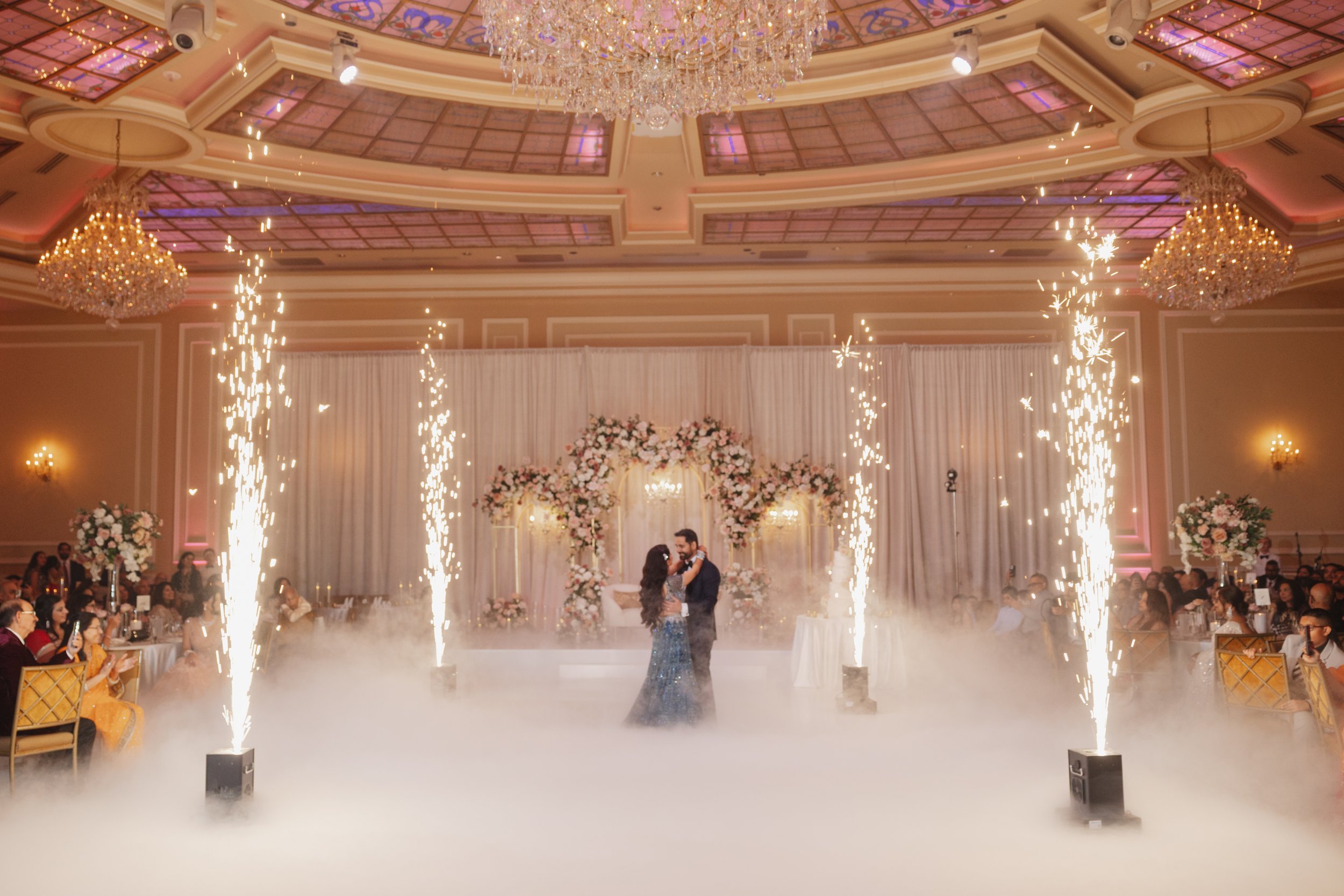
South Asian bride and groom having first dance during wedding reception in Los Angeles, CA
By the time most couples start planning outfits, they've already been asked a hundred times what they're wearing to the wedding. But a multi-day South Asian wedding isn't one outfit question — it's five or six. And every single one of them shows up differently through a camera.
I've photographed enough mehndis, haldis, sangeets, ceremonies, and receptions to know that the outfit isn't just about the moment you're in — it's about how that moment will look for the next fifty years. So I always tell my couples: think about color, movement, and light before you think about trend.
Here's how I'd approach it, event by event.
Mehndi: Where Color Gets to Be Loud
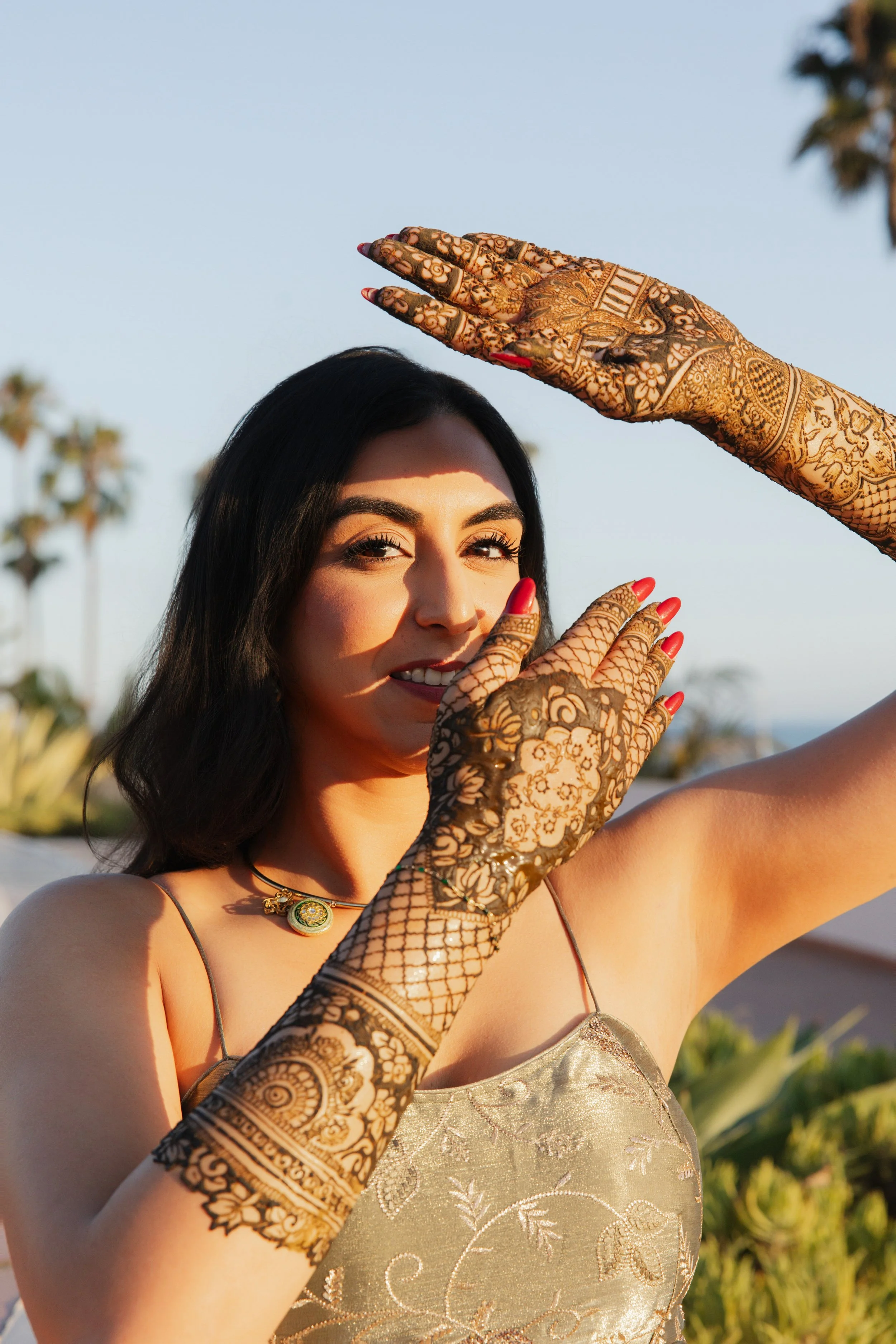
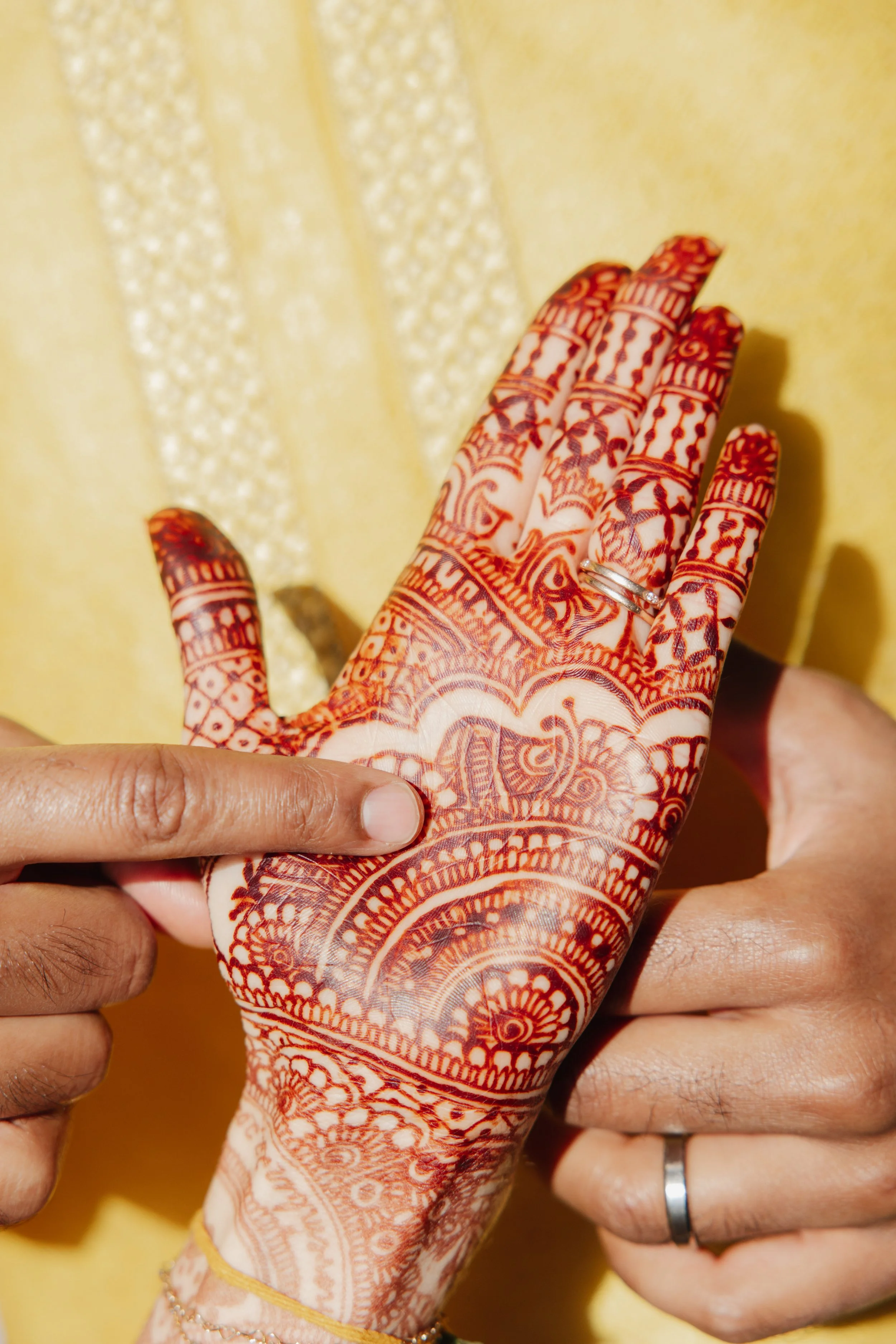
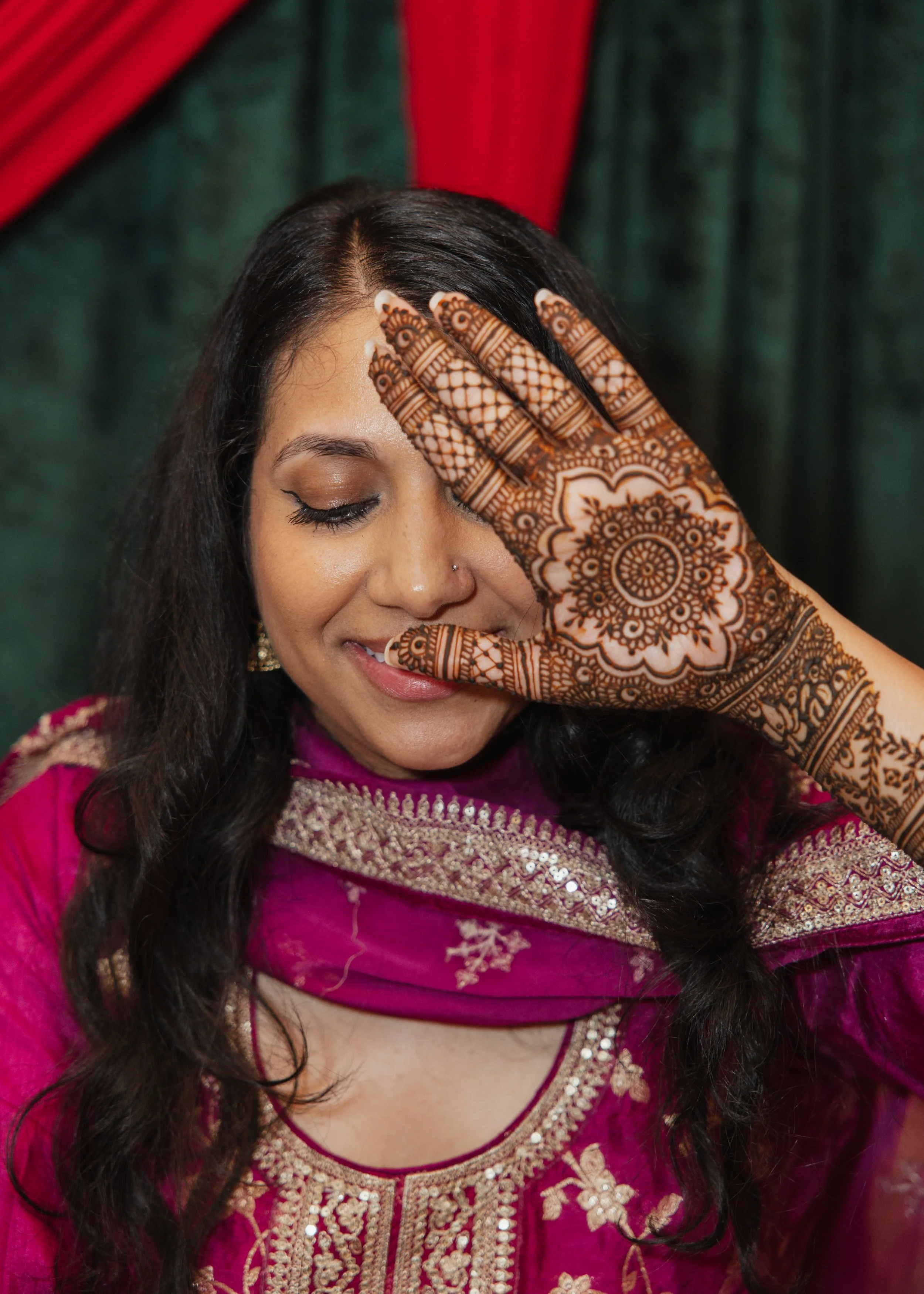
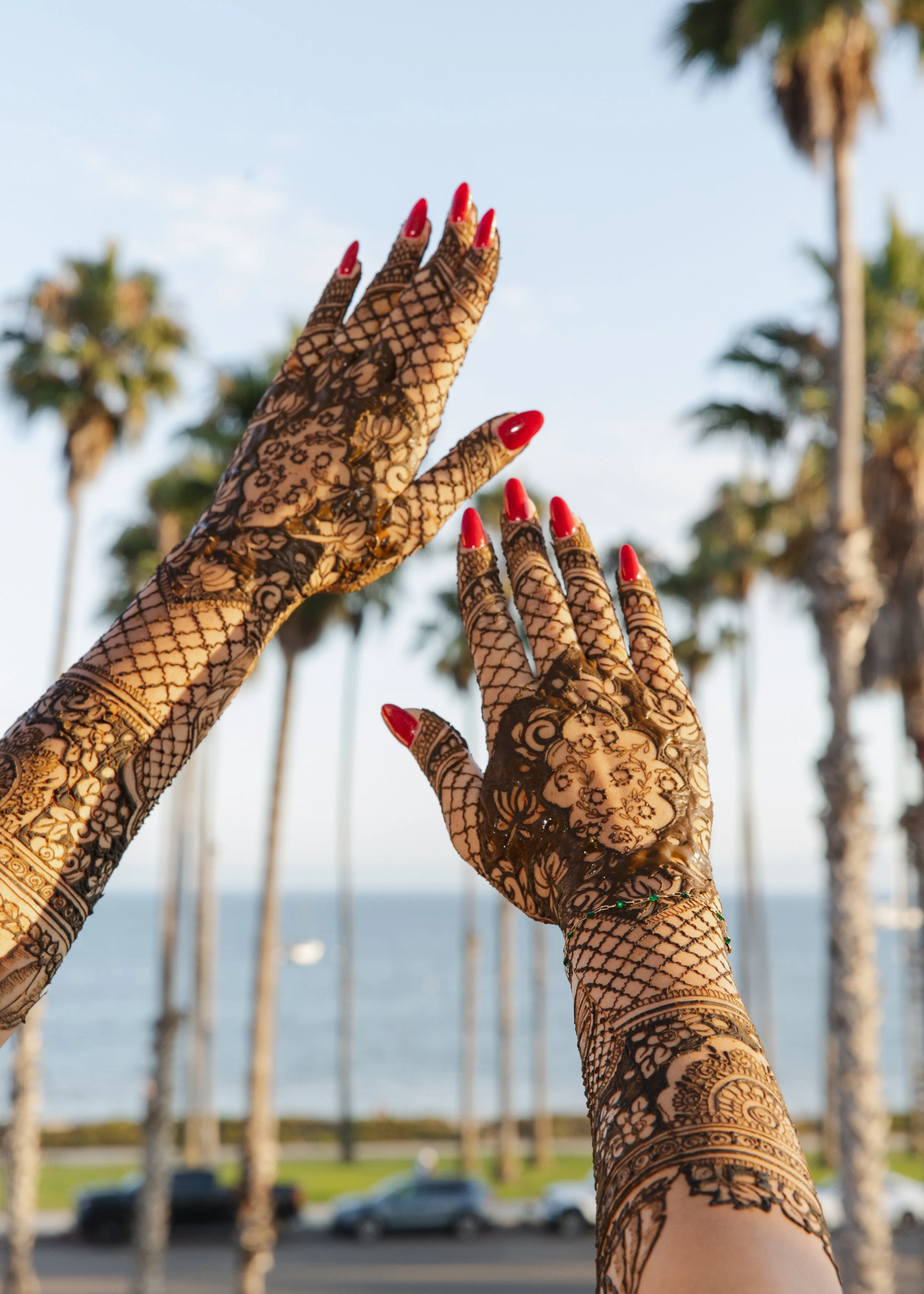
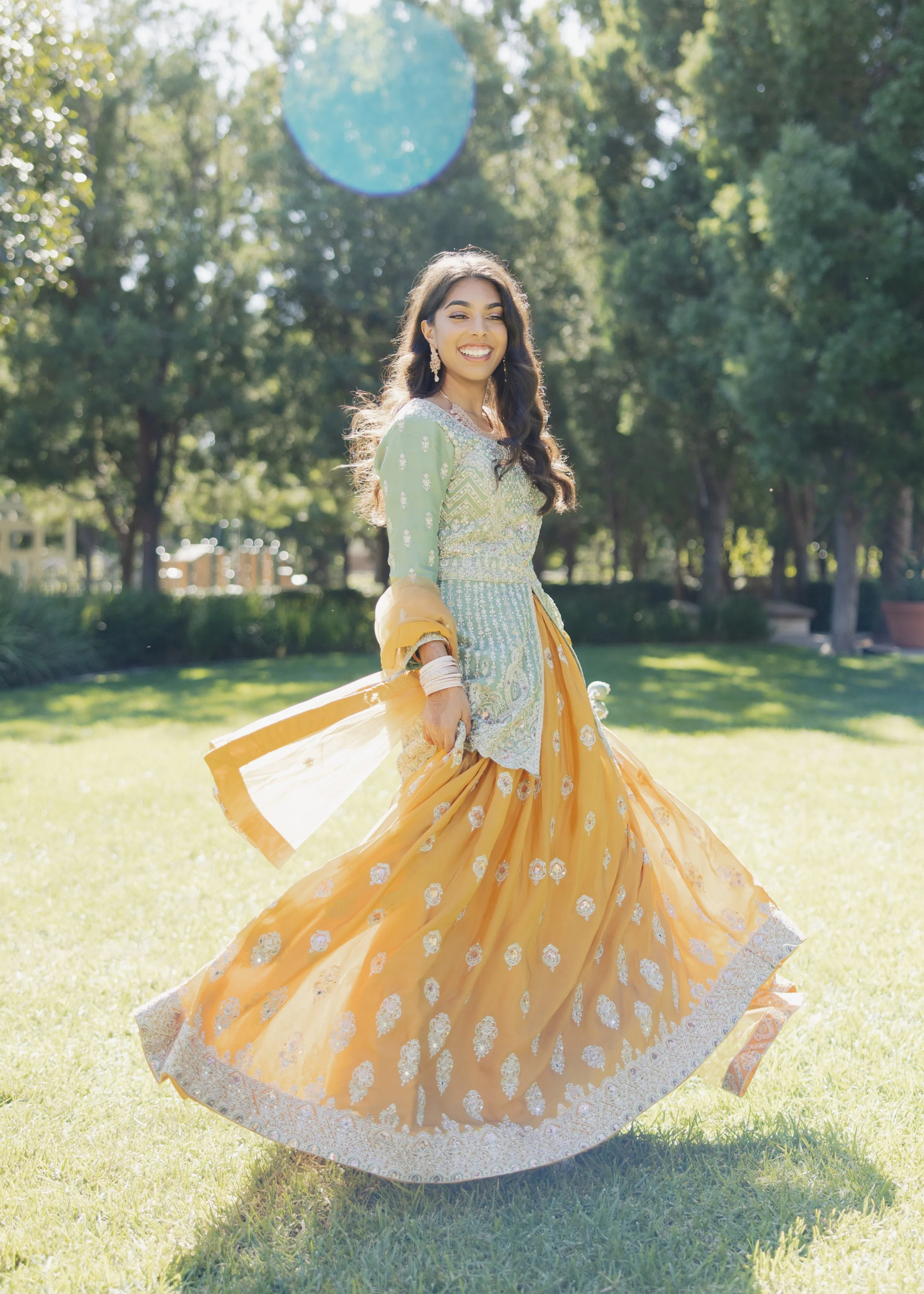
Mehndi is the one event where you can genuinely go bold. Bright yellows, oranges, pinks — they photograph beautifully against henna-stained hands, marigold backdrops, and the kind of candid, floor-seated laughter that mehndi days are known for.
What I look for: fabrics that hold color well in direct or filtered sunlight (most mehndis lean daytime or golden hour), and comfortable silhouettes since you'll likely be sitting for long stretches while henna is applied. Skip anything too structured — the best mehndi photos are almost always candid, and stiff fabric doesn't move the same way in a laugh or a hug.
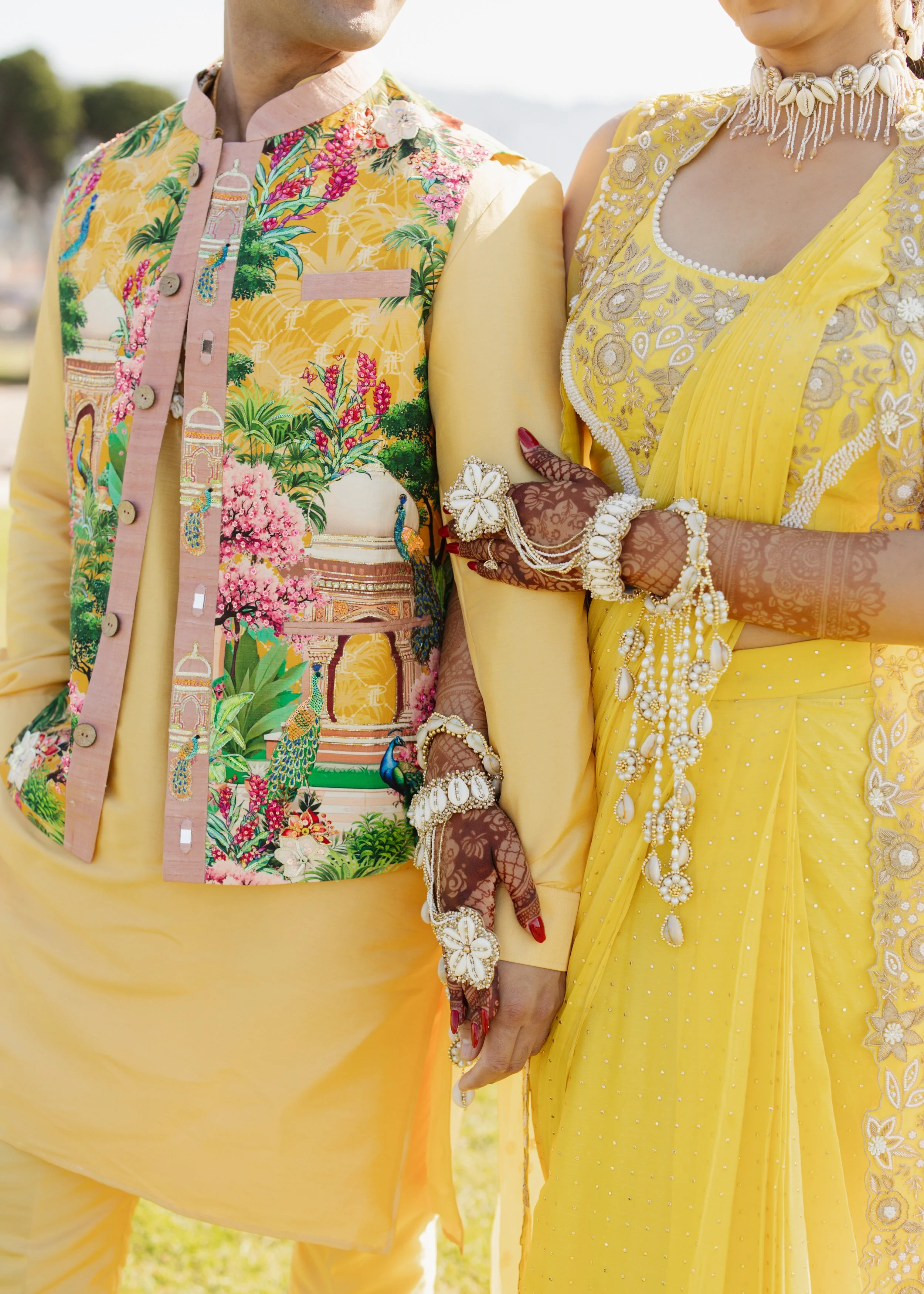
Haldi: Let the Yellow Do the Work
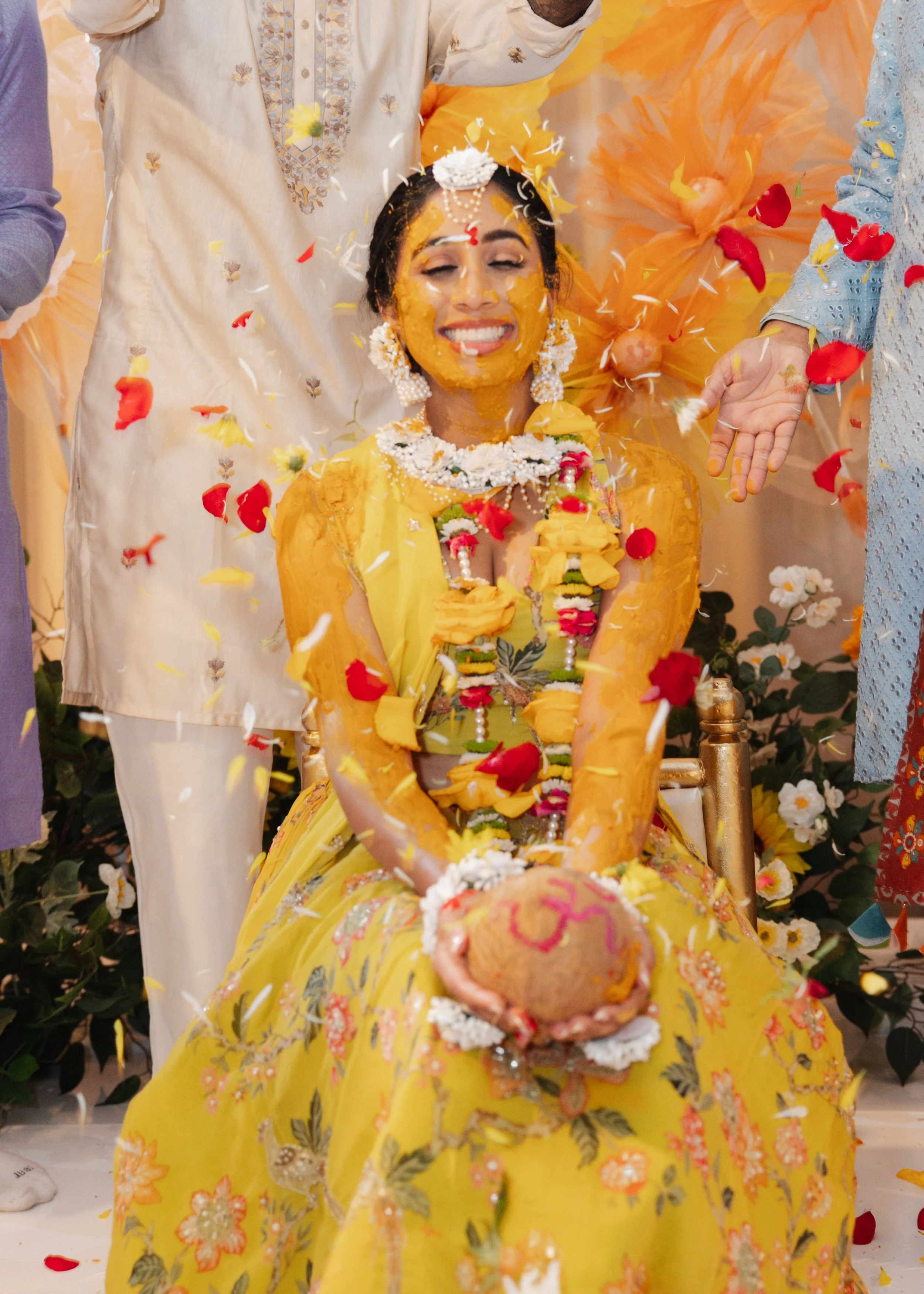
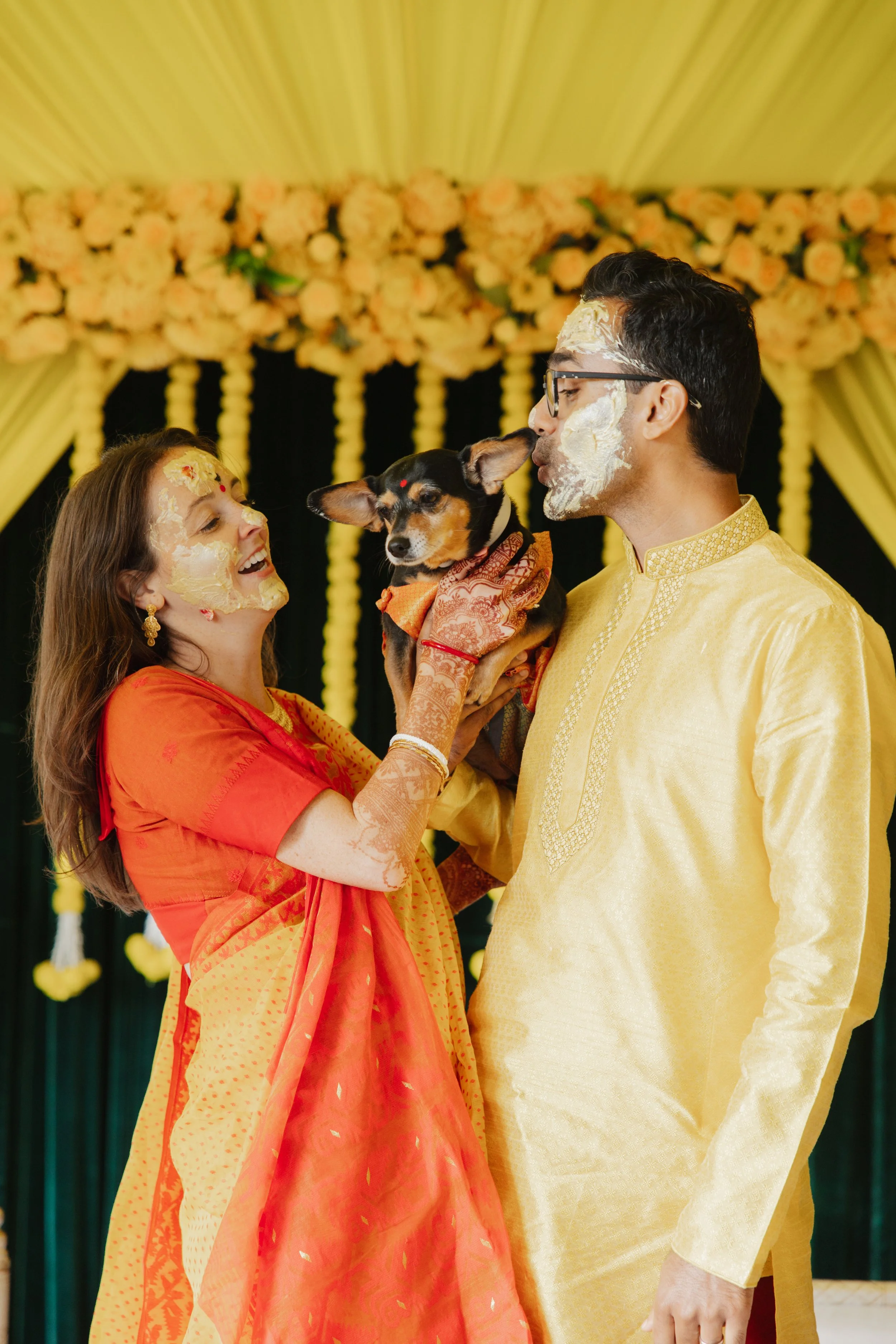
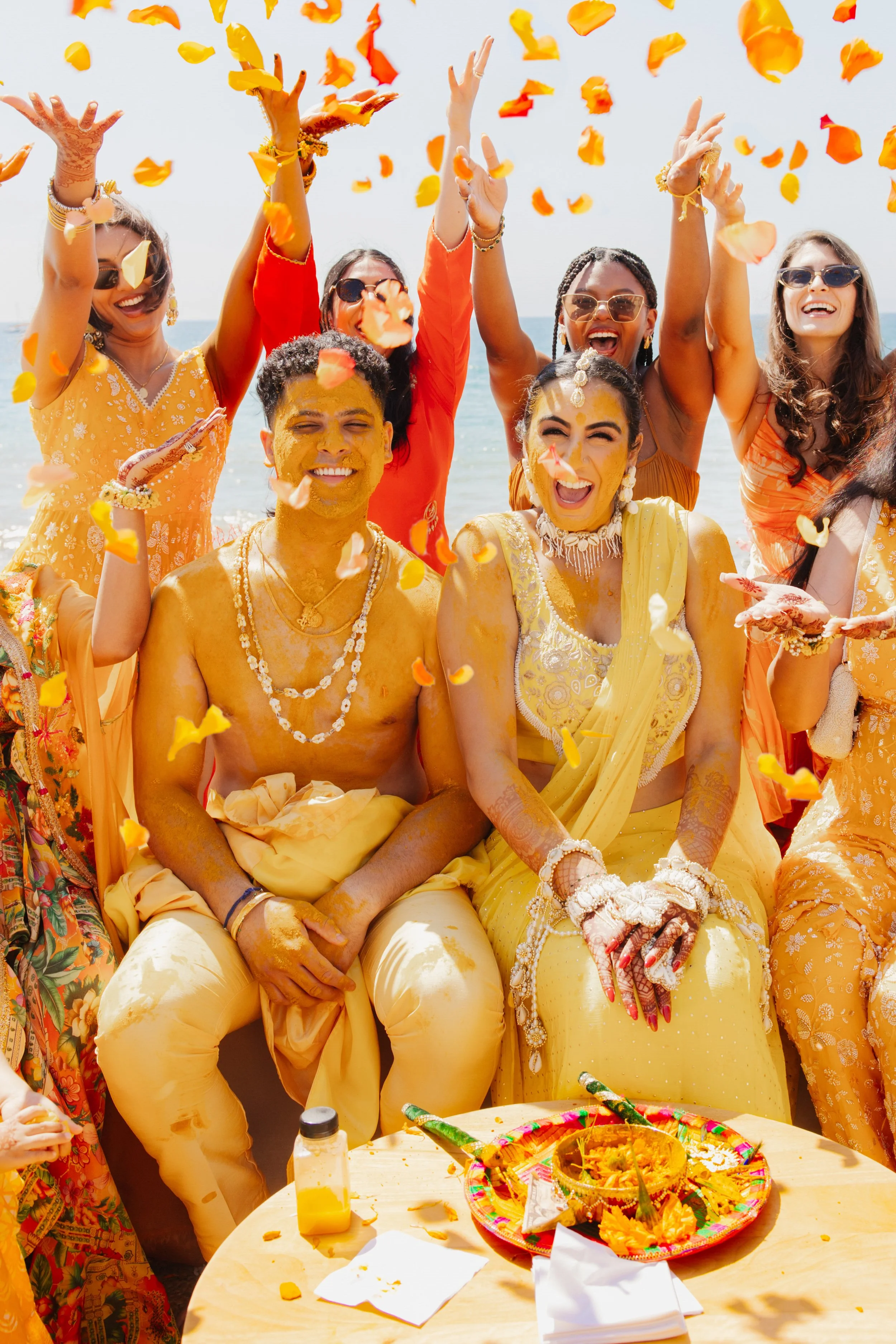
Haldi is messy, joyful, and genuinely one of my favorite events to shoot — which means your outfit should be able to take a hit. Think light cotton or simple silhouettes in white, cream, or pale yellow, so the turmeric paste shows up vividly against the fabric rather than blending in.
A quick note from behind the camera: avoid anything you're precious about. The most beautiful haldi photos happen when people stop worrying about their outfit and just let the moment happen.
Sangeet: Where Movement Matters Most
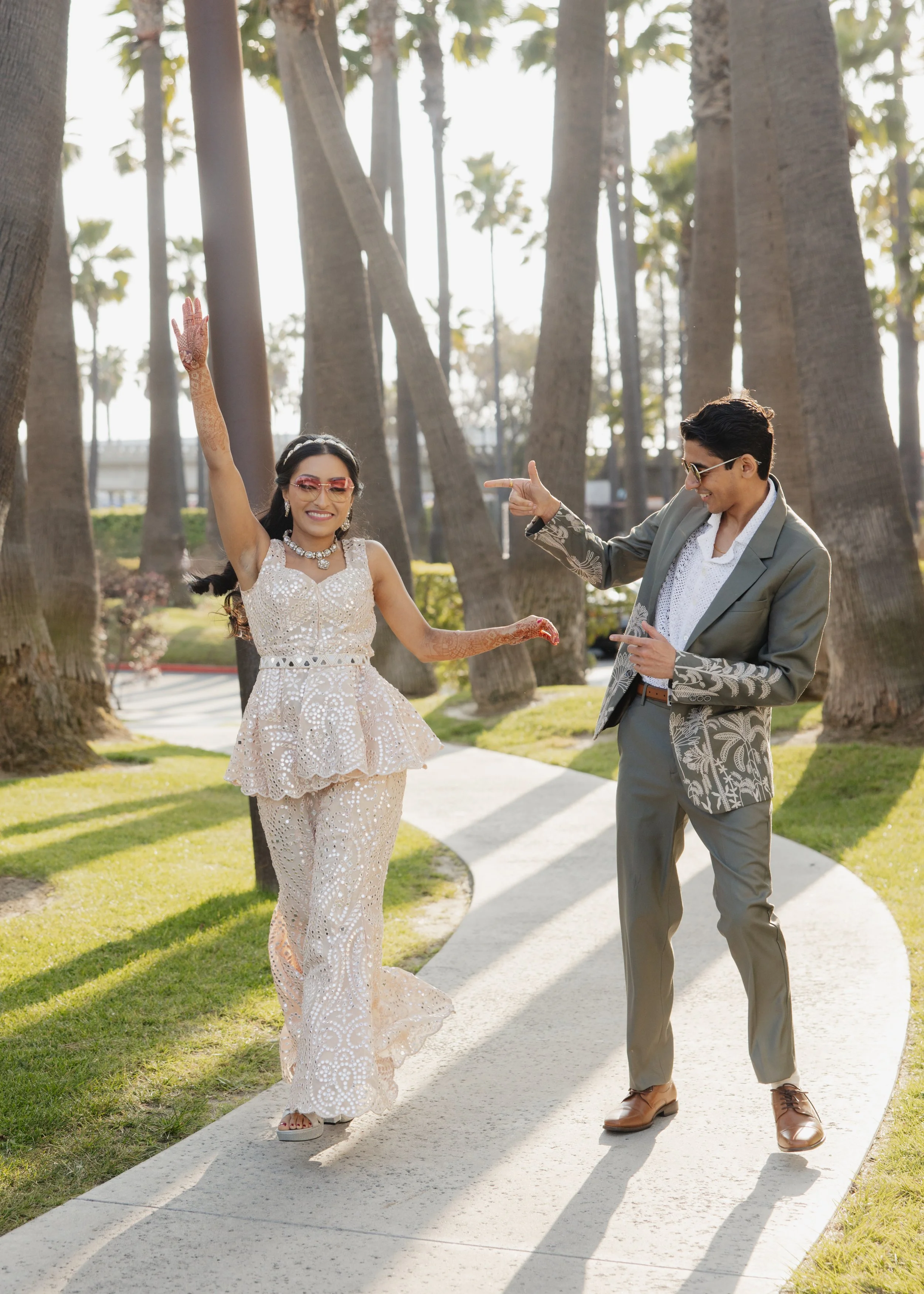
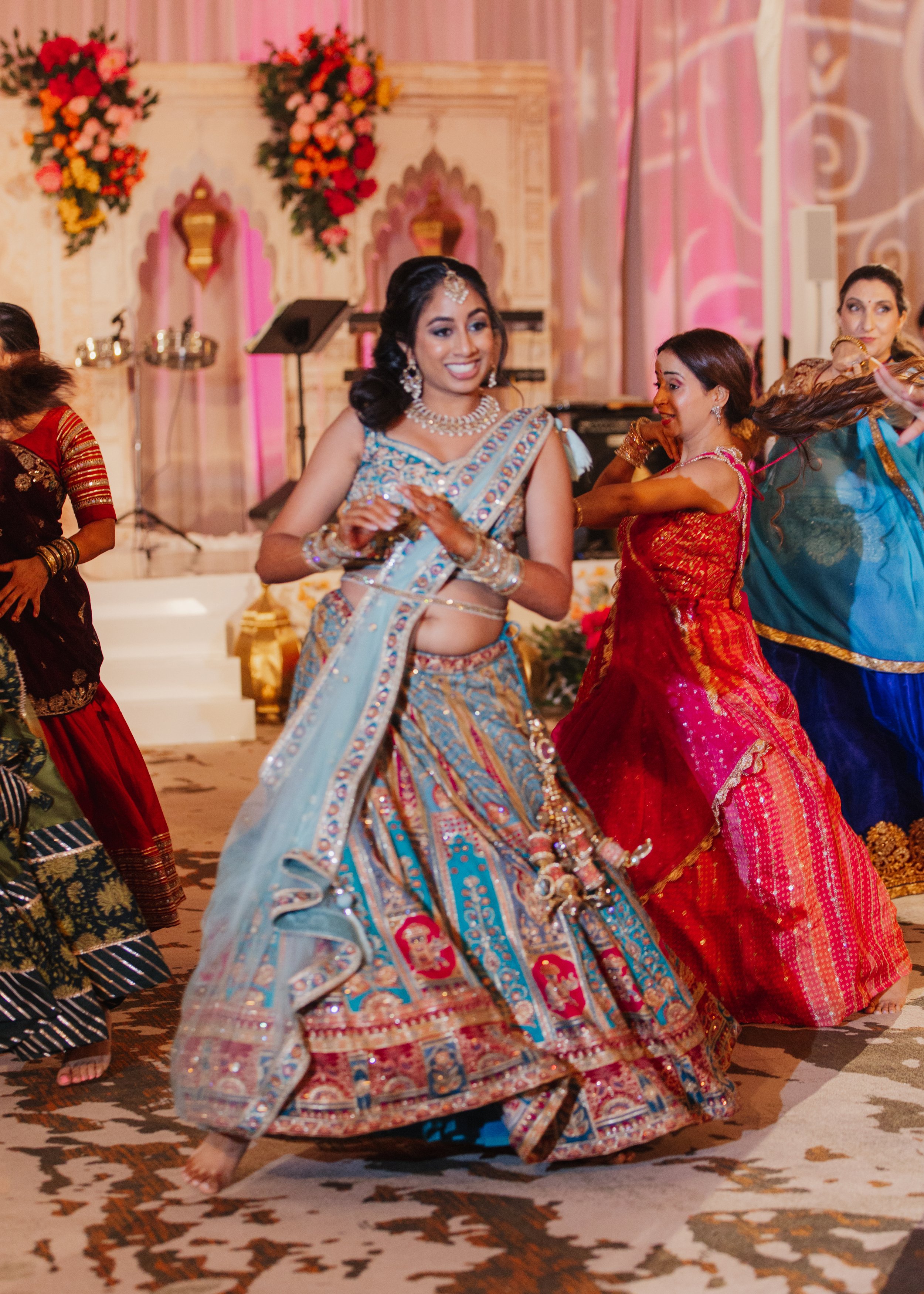
Sangeet outfits need to move — literally. Between choreographed dances and spontaneous dance-offs, I'm often shooting mid-motion, and fabrics with flow (flared lehengas, lightweight dupattas, anything with some drape) create far more dynamic images than something fitted and stiff.
This is also where color contrast against your venue matters. A jewel-tone lehenga against string lights or a dark reception hall creates images that feel rich and cinematic. Sequins and metallics catch stage lighting beautifully too, so if there's a dance floor moment you want to look back on, this is the event to lean into shimmer.
Ceremony: Timeless Over Trendy
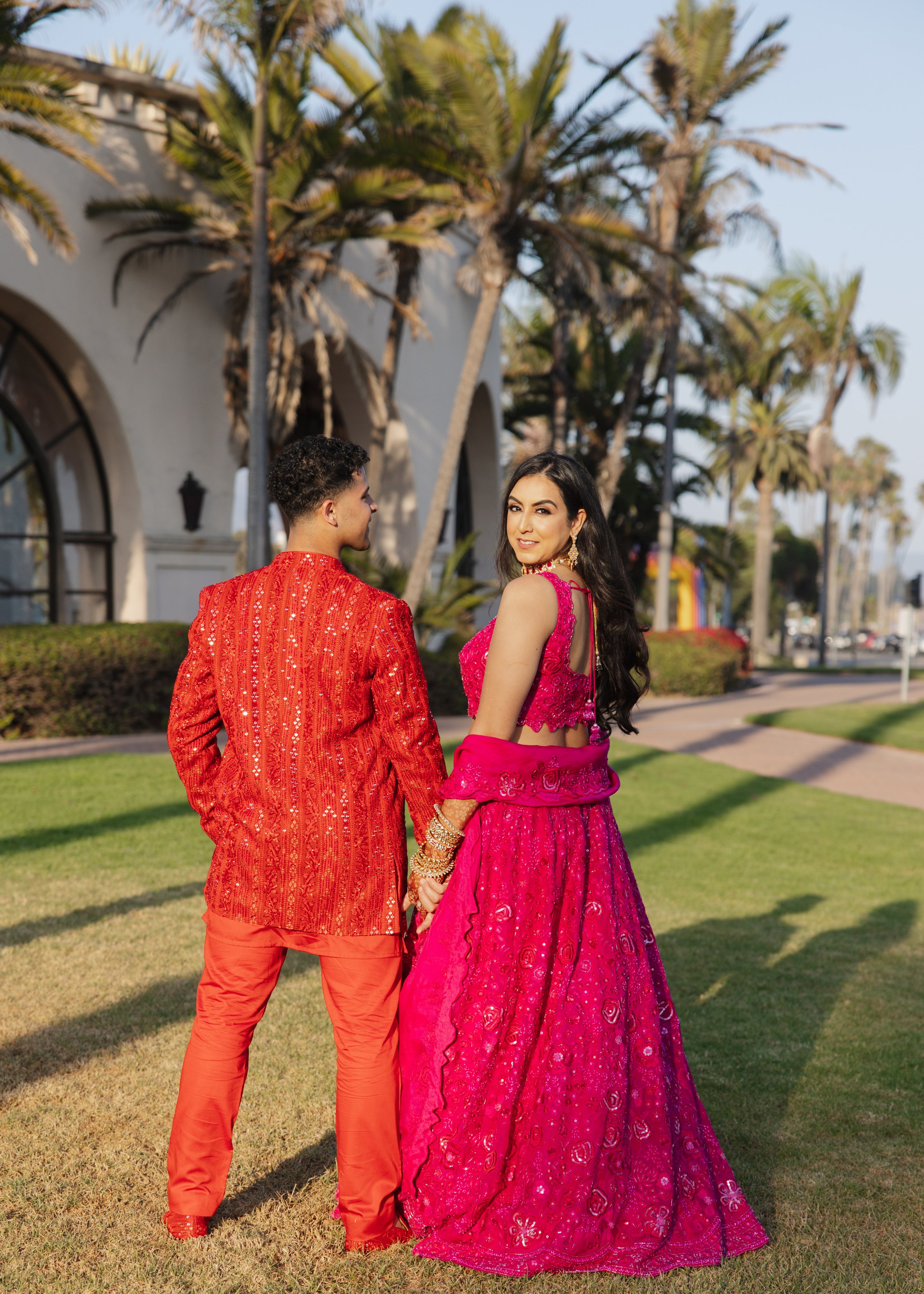
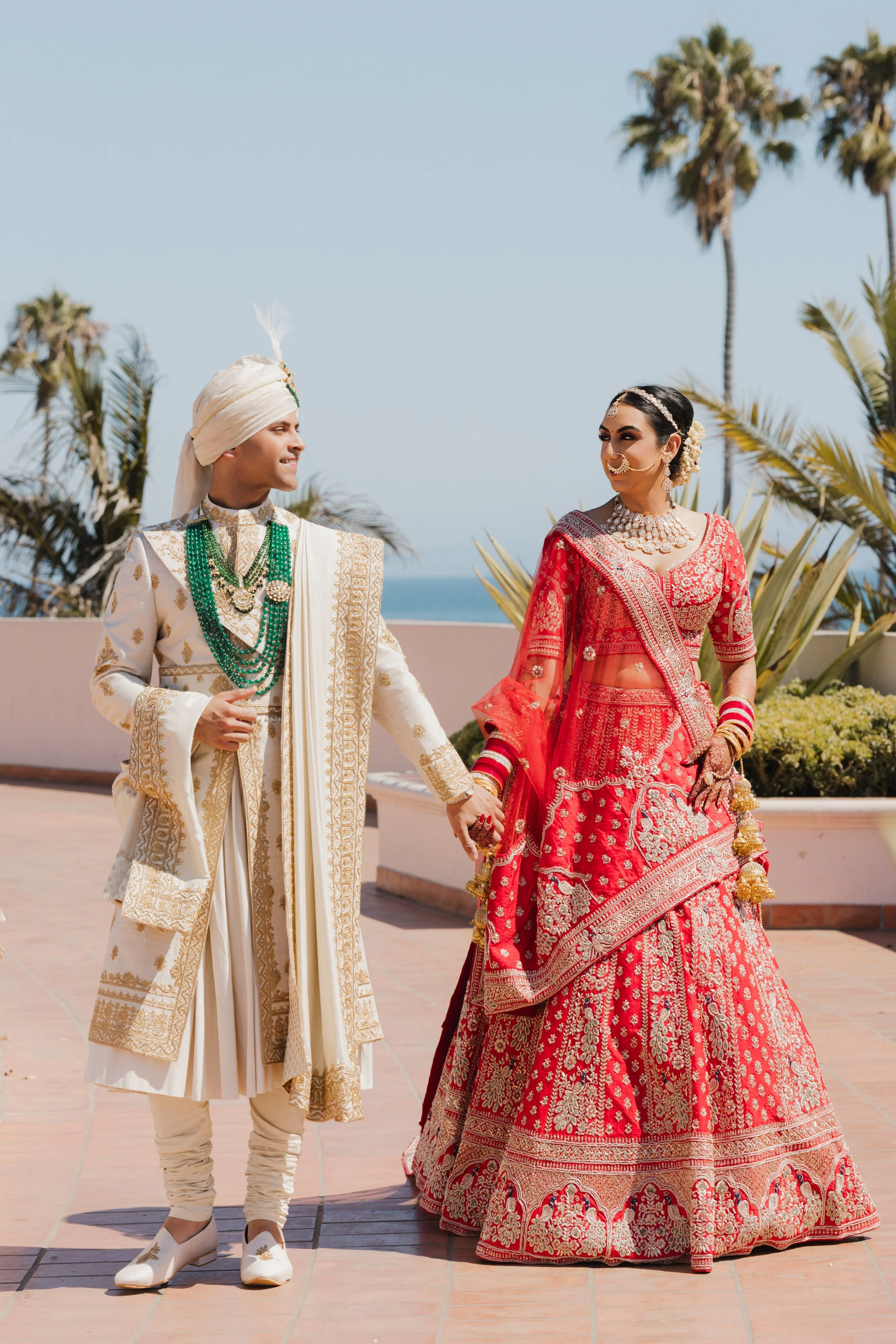
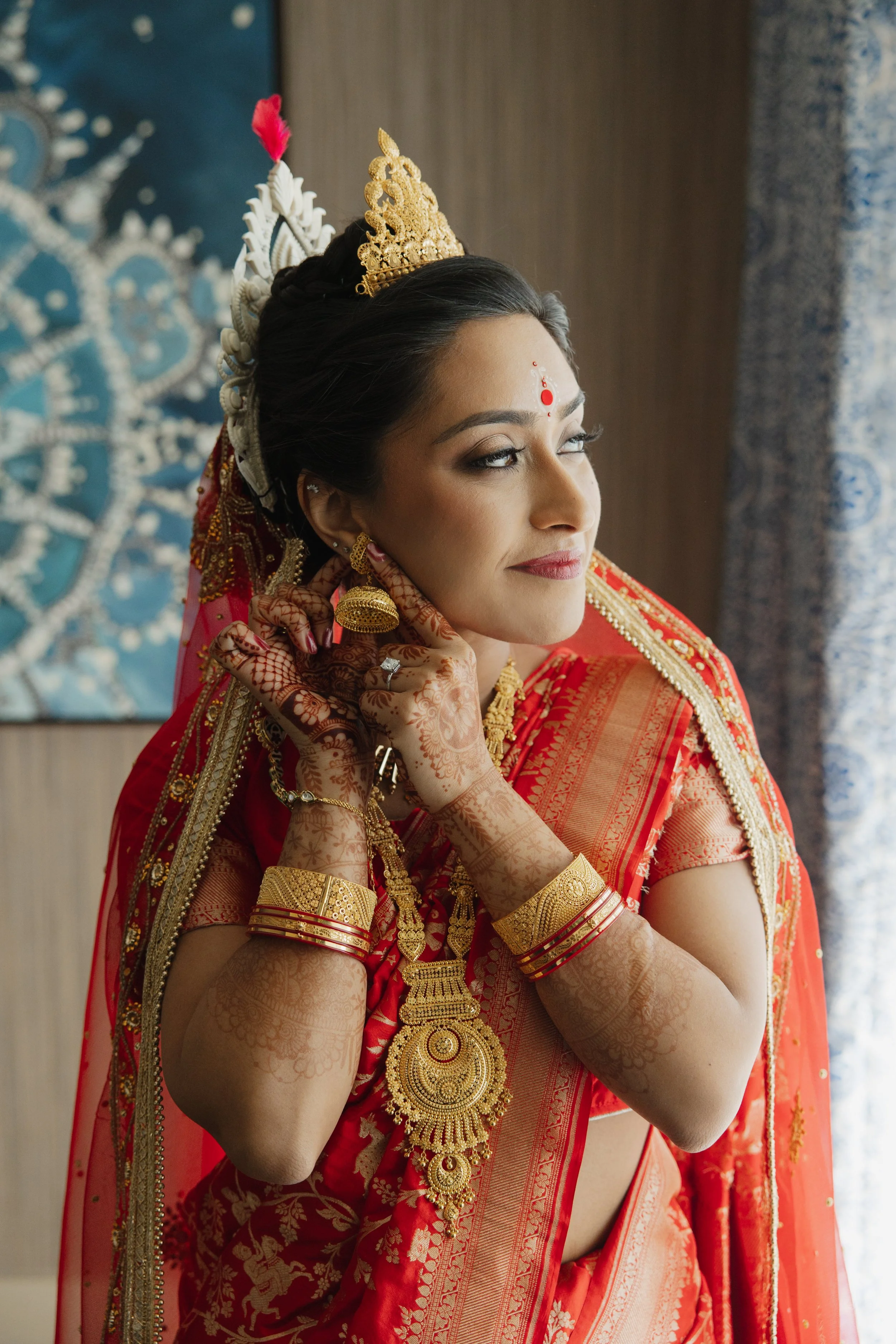
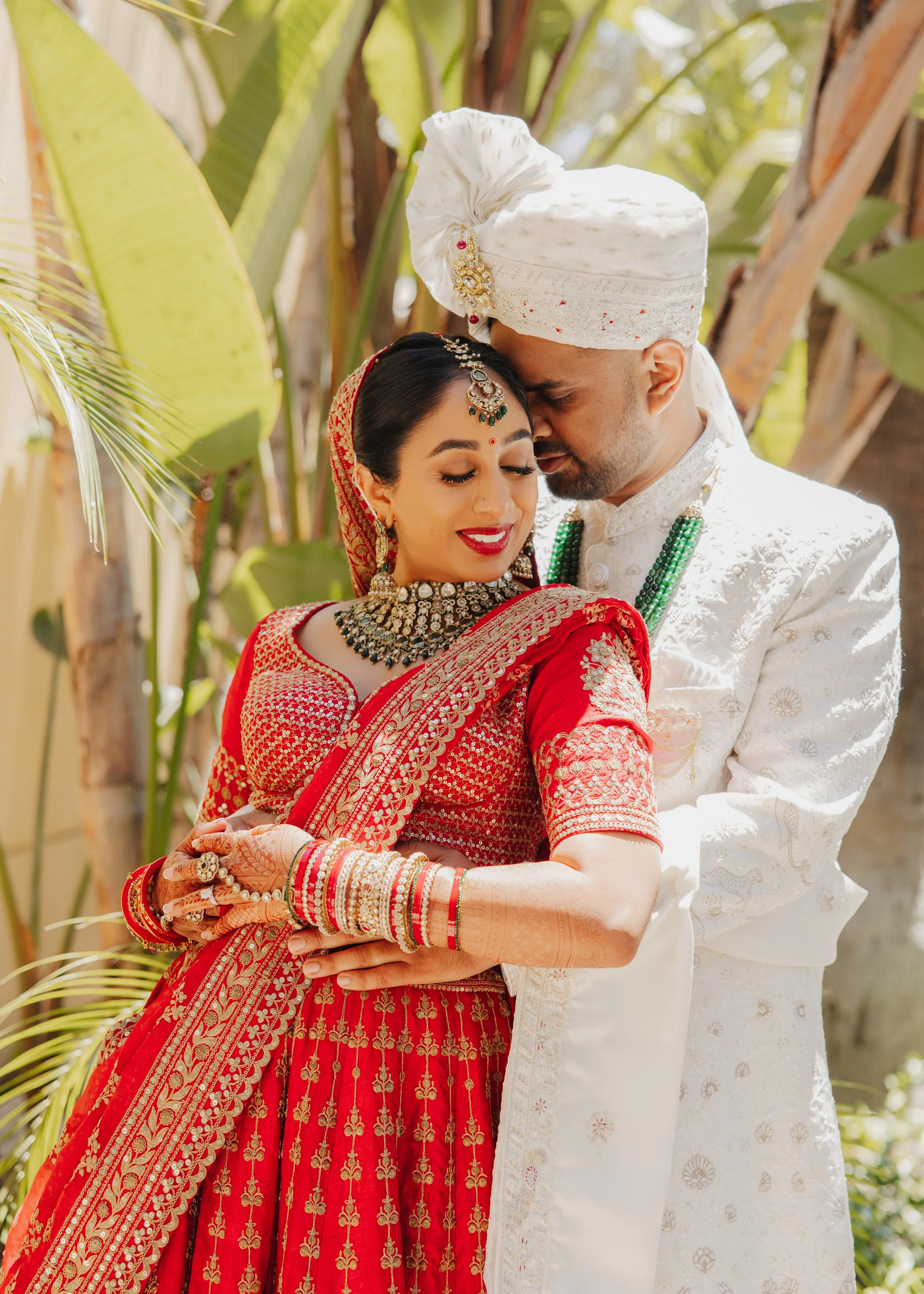
Your ceremony outfit is the one you'll look back on most — in your own memory and in your children's, eventually. I always encourage couples to choose something that feels timeless rather than tied to a current trend, because these are the photos that get framed, printed, and passed down.
Rich, traditional colors (deep reds, maroons, golds) tend to photograph beautifully across every kind of ceremony backdrop, from an outdoor mandap to a temple's marble interior. If your ceremony includes an open flame or extended rituals, breathable fabric matters more than you'd think — comfort shows up on your face in every photo.
Reception: Where You Get to Have Fun With It
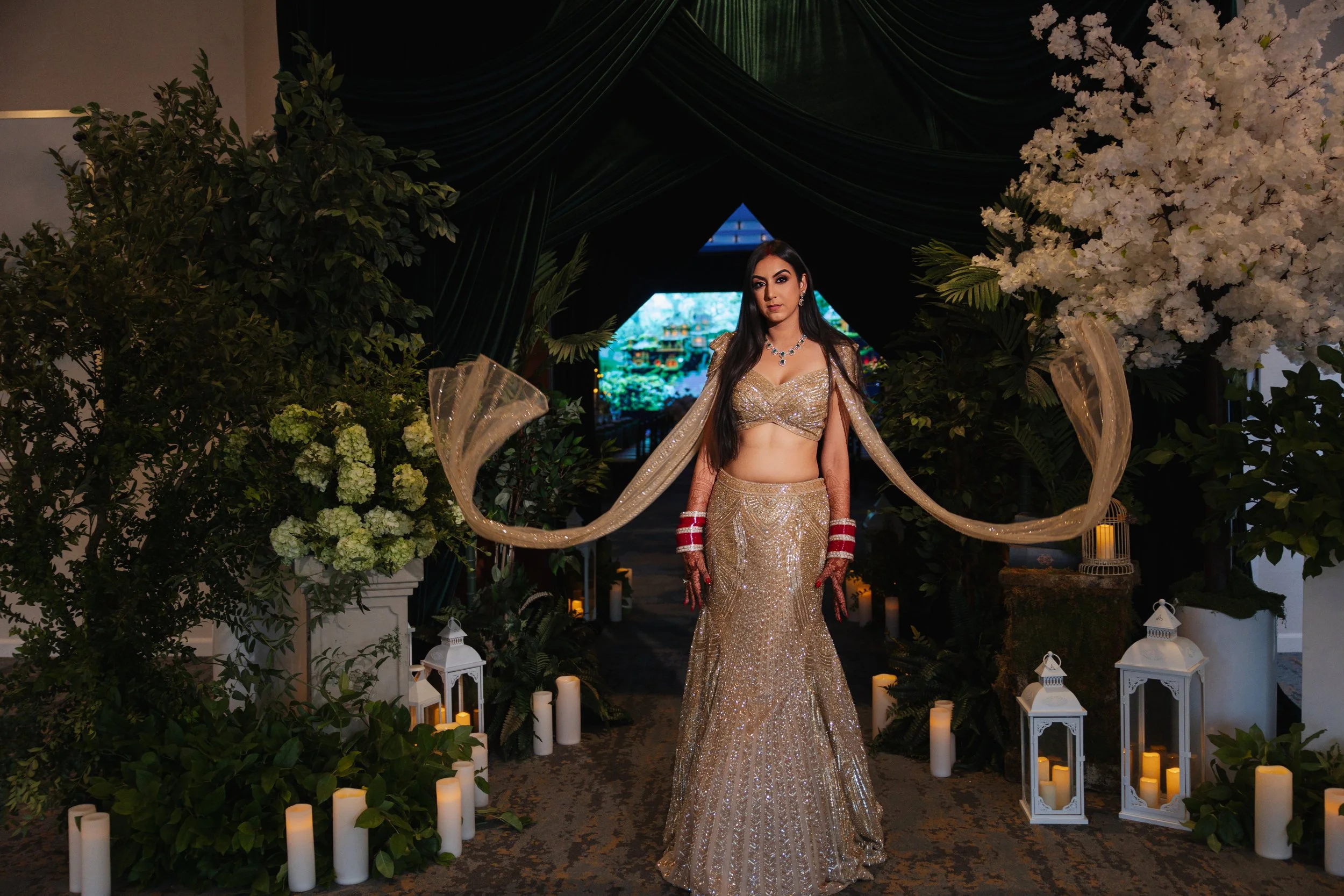
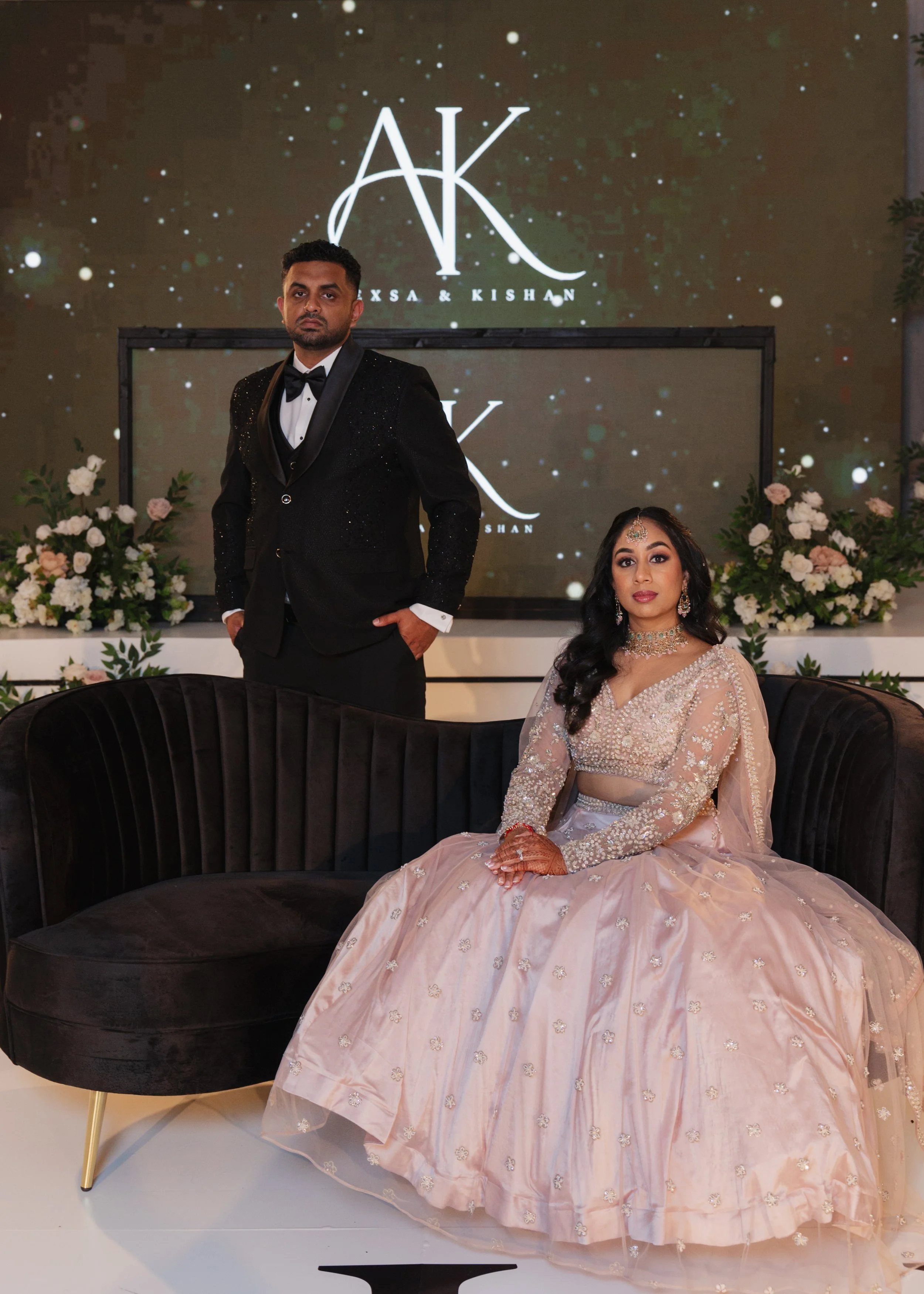
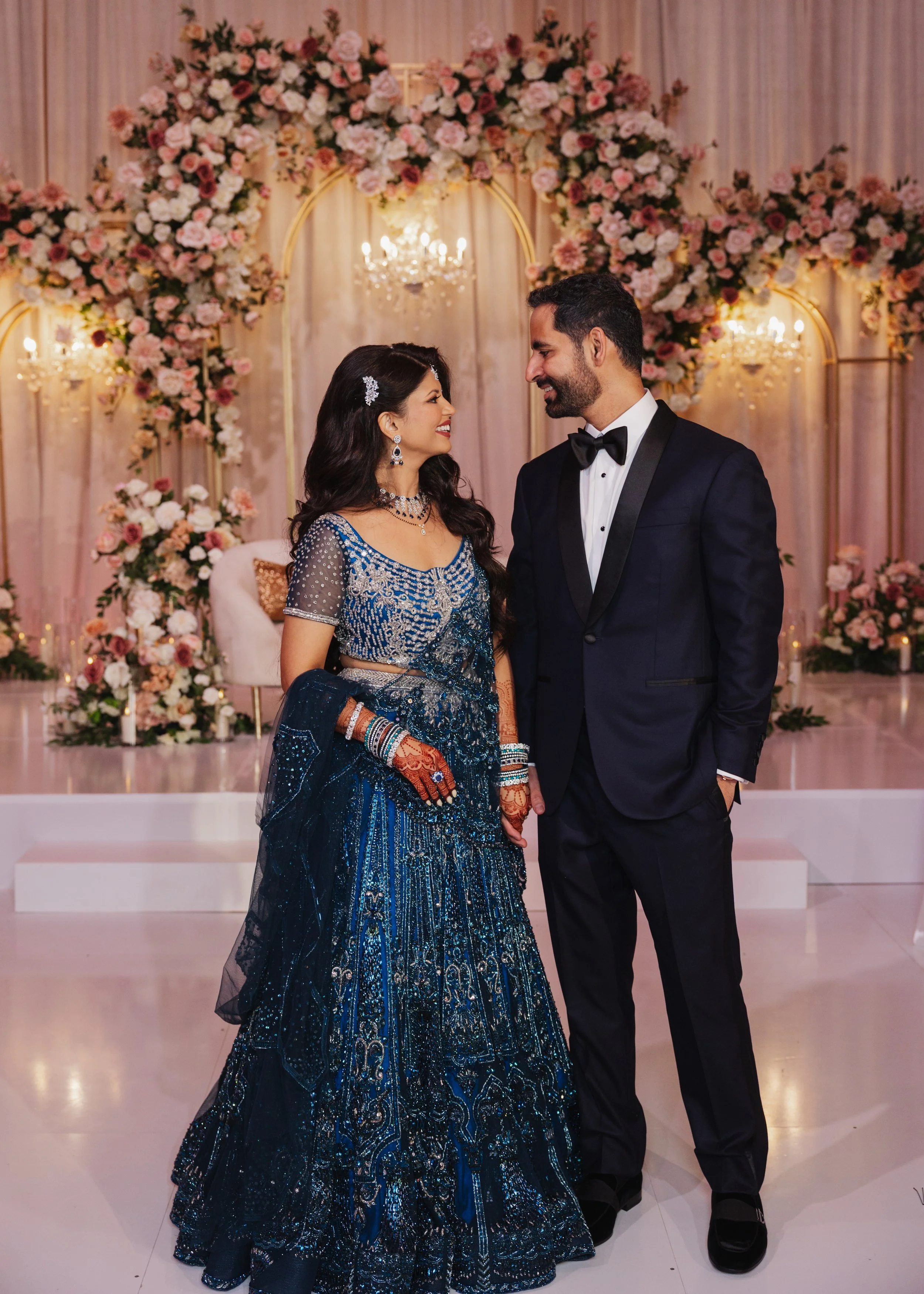
By the time the reception arrives, most couples finally exhale — and their outfit choice usually reflects that. This is where I see the most personality: fusion pieces, unexpected colors, dramatic silhouettes for a grand entrance, or a completely different vibe from the ceremony look.
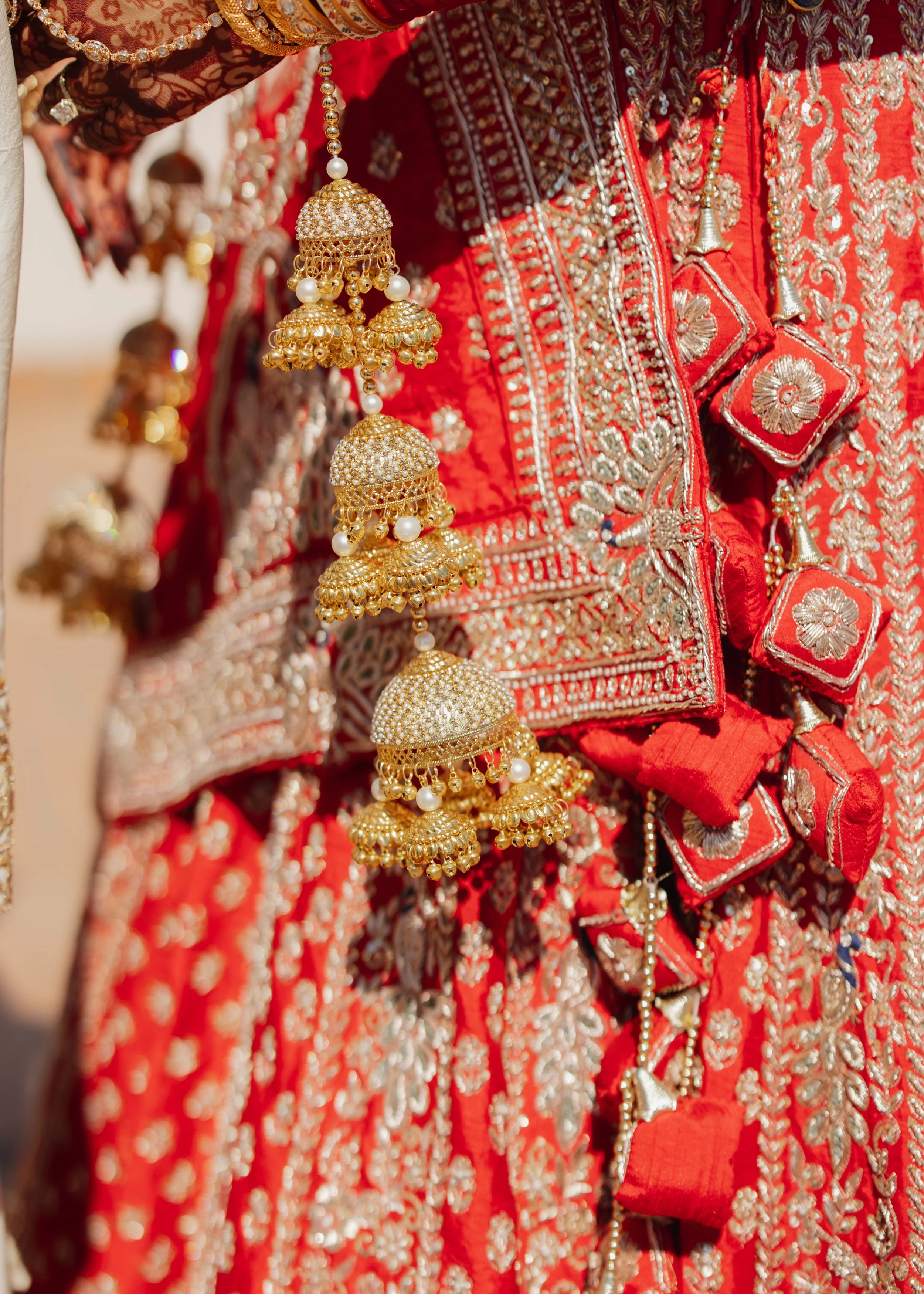
From a photography standpoint, this is also where lighting changes the most — receptions often move from daylight into string lights, uplighting, or a dance floor with moving lights. Metallics, deep jewel tones, and anything with texture (velvet, embroidery, beading) hold up beautifully under all of it.
A Few Things I Always Tell My Couples
Coordinate, don't match. Your outfits across events don't need to match each other, but thinking about the emotional arc — soft and playful at mehndi, rich and traditional at ceremony, bold at reception — creates a gallery that feels intentional from start to finish.
Test your outfit in motion before the day. If you can, walk, sit, and raise your arms in it beforehand. What feels fine standing still can look and feel very different mid-dance or mid-ritual.
Bring a backup dupatta or stole. Wind, movement, and long days can shift things — a spare almost always ends up saving a photo.
If you're planning a multi-day South Asian wedding and want a photographer who thinks through these details with you — not after the fact, but as part of the planning process — I'd love to talk. This is exactly the kind of storytelling I built Lumière by Aishia around.
FAQ
Do our outfits need to match across all the wedding events?
No — in fact, most of the best multi-day wedding galleries show real variation from event to event. What matters more is that each outfit fits the mood and setting of that particular celebration.
What colors photograph best for an outdoor mandap ceremony?
Rich, saturated colors like deep red, maroon, and gold tend to hold up beautifully against natural outdoor light and greenery, while pastels can occasionally wash out in strong midday sun.
Should we avoid certain fabrics for a haldi ceremony?
I'd recommend simple, light cotton in white or pale yellow. Turmeric stains show up vividly against light fabric, and cotton is comfortable for a ceremony that tends to run long and get messy in the best way.